Uncovering empowerment processes of a sport-based paid mentorship programme: the case of YFC
- Apr 6, 2023
- 52 min read

Abstract
As collective action for social transformation fails to materialise, the effectiveness of sport-based women´s empowerment initiatives is much debated. Focusing on such an initiative in Punjab, India, this thesis investigated how the underlying individual empowerment processes occurred and what processes simultaneously kickstarted within families to support those debates. I interviewed participants, coaches, and staff and incorporated participant observation. Individual processes occurred gradually, multidimensionally, context-dependently, and sequentially, but overlapping. They were linked and led to empowering and disempowering effects. Furthermore, they were connected to processes within families, which mainly concerned changes in conflict intensity or frequency and the development of more tolerance towards the programme. Ultimately, I conclude how to improve SWEIs, but that additional structural change must co-occur.
Introduction
Empowering women is key to building a future we want. – Sen (2012)
Although studies have supported Sen by showing that gender inequality[1] impacts sustainable development negatively in many ways long ago, facts such as further necessary 132 years to close the global gender gap in 2022 or 113 countries worldwide remaining without laws to ensure equal pay for women in 2019 highlight that there is still lots of room for improvements worldwide and in all areas (WEF, 2022; PM, 2021; Klasen, 2000; Figure 1).

India constitutes no exception with the historically rooted and continuously socially constructed perception of women as secondary (Batra and Reio, 2016; Table 1). For years, particularly the state of Punjab attracted negative research attention due to a consistently low child sex ratio despite considerate socio-economic development during the green revolution (Kaur, 2010; Figure 2). Although it improved up to 843 girls per 1000 boys under seven in urban and even 926 in rural areas in 2021 (IIPS, 2021, p.37), the underlying perception remains problematic considering, e.g., that still only 1.55% of Punjabi women hold land in 2016 (Aujla, 2019). Likewise, barely changing gaps in educational achievements (Sen and Dreze, 1995; Figure 3) or a declining female labour participation rate (Figure 4) in predominantly rural areas demonstrate how deeply ingrained sexism still is in Punjab (Purewal, 2010, 2018).


How to approach this problem is an interesting question. Despite several structural top-down policies, including gender-targeted cash transfers schemes for girls (Singh, 2019), sexist Punjabi culture objectifying women in music, sports, and media (Sandhu, 2021) or continued son preference, e.g., indicate that sustainable improvement not only requires gender-targeted structural change but a simultaneously occurring individual rethinking (Arora, 2012; Singh, 2017).
This is precisely where sport-based women´s empowerment initiatives [SWEIs] tie in and promote women´s empowerment through raising critical awareness and equipping females with self-confidence or skills to support social transformation (Batliwala, 1993). Whether this bottom-up, agency-driven approach works is much-debated (Coalter, 2015). Studies generally indicate positive individual empowerment results, including improved awareness, self-efficacy, or skills (Jarvie, 2011). However, context-dependent improvements are sometimes accompanied by adverse effects, including, e.g., conflicts within families. Furthermore, they barely transfer to meso- or macro-levels and thus contribute to more systematic change (Chong et al, 2022). While the dominant view thus argues that SWEIs mainly optimize agents into oppressive structures instead of transforming them, radical interventionist feminists call for a more nuanced understanding of SWEIs to make them transformative as sport-based empowerment is complex and multidimensional (Malhotra et al, 2002). They refer to barely covered empowerment processes (Nols et al, 2017), new contexts such as India or Punjab (Schulenkorf et al, 2016; Singh, 2014) and almost uncharted territory like paid mentorship programmes (Meyer and Roche, 2017) with economic benefits (Kabeer, 2008, 2012).
This paper seeks to answer this call by investigating how individual empowerment processes occur for a paid mentorship programme of Youth Football Club Rurka Kalan [YFC] in Punjab and what processes are simultaneously kickstarted within families to understand the potential to transfer outcomes and tackle gender inequality sustainably. Ultimately, the results shall help to optimise projects by directing the enormous amount of attention, effort and money spent on SWEIs in the right direction and finally initiate fundamental change (Hancock et al, 2013). This paper critically engages with current literature, outlines the conceptual framework, and provides background information. Then, it describes the methodology, presents the findings, and discusses them. Finally, this study concludes that SWEIs must a) incorporate males, families and communities more, b) optimise the multidimensional interplay of empowerment processes and c) be accompanied by or linked to structural change.
2 Sport-based women's empowerment initiatives
2.a SWEIs and the driving ideas behind them
Driven by ideas of radical empowerment feminists, SWEIs refer to sport-based programmes for youths and young adults which prioritise women´s empowerment over athletic ambitions to initiate social change (Turner and Maschi, 2015; Spaaij et al, 2016). By assuming women as suffering from oppression on both individual and structural levels (Maschi et al, 2022), this theory argues, on the one hand, that gender equality requires initial individual empowerment through enhancing agency (Todd and Occiuto, 2022; Nussbaum, 2000). Consequently, SWEIs incorporate exercises such as football sessions to promote well-being (Brady, 2005) and sport-based activities for education or personal development (Alemu, 2017; Mwaanga and Prince, 2016). Some mentorship programmes integrate paid employment opportunities to provide an independent income (Bankar et al, 2018).
Although those individual benefits help to reach a person´s full potential (Bandura, 1997; Maslow, 1943), radical empowerment feminists argue that this alone is insufficient for social change because gender inequality is collectively constructed and reproduced by structures. Consequently, changing those must follow via collective action in the long run (Kabeer, 2005; Batliwala, 2007). However, this does not happen overnight. For collective action, two factors are crucial. First, fostering critical awareness about oneself and oppressive structures to overcome those is paramount (Freire, 1970; Hipolito-Delgado and Lee, 2007; Gutierrez, 1995), as women often internalise their subordinate status through socially ingrained habits, skills, and dispositions – a phenomenon Bourdieu (1977) calls doxa. Taking up this idea, SWEIs foster critical consciousness through gender-targeted workshops and international networks (Collumbien et al, 2019; Cislaghi et al, 2020; Hayhurst et al, 2011).
Second, initiating everyday social struggles to challenge gendered spheres of life (Lefebvre, 1991) and thereby also alternate gender perceptions of males through inter-group contact in public (Allport, 1954) is crucial. SWEIs also incorporate those ideas as, by introducing women to mixed environments, they initiate social struggles in gendered social spheres such as sport, work, or the female body (McCaughey, 1997; Hartmann-Tews and Pfister, 2003; Xiong, 2019). Ultimately, SWEIs intend to lay the foundation to kickstart collective action through capable, critically aware women and men. Whether this model works is much debated.
2.b Positive impacts
Several studies show that sport-based programmes can generate change on an individual and, occasionally, family or community level (Chong et al, 2022).
E.g., participants increasingly felt physically strong and in control over their bodies (Fuerniss and Jacobs, 2019; McDermott, 2004; Kay, 2009; Blinde et al, 2001). This explained a later sexual debut and fewer teen pregnancies (Ogunniyi, 2015) or the adoption of a healthier lifestyle (Alemu, 2017) which led to increased self-confidence in physical abilities (Liechty et al, 2016; Hayhurst et al, 2014) and resistance against male-dominated aspects in sport (Henderson and Hickerson, 2007; Shaw, 2001).
Similarly, studies confirm enhanced personal development and leadership, communication or negotiation skills, indirectly benefiting uninvolved families and communities (Chawansky and Mitra, 2015; Kay and Spaaij, 2011) and increased self-efficacy (Seal and Sherry, 2017; Zipp, 2017). Based on that, participants were confident enough to access previously inaccessible spheres of life, which allowed for different social experiences and bonding (Brady and Khan, 2002; Huggins and Randell, 2007; Bankar et al, 2018). The emerging sense of belonging through new relationships contributed to overall personal development (Coalter and Taylor, 2010; Levermore and Beacom, 2009).
A final aspect relates to an increased critical consciousness which many participants and some immediate family or community members increasingly displayed related to both oppressive structures and perceptions of women (Meyer and Roche, 2017; Alemu, 2017; Seal and Sherry, 2017; Cislaghi et al, 2020). In the case of one paid mentorship programme, this initiated beginnings of collective action (Bankar et al, 2018).
2.c A more critical perspective
However, critically analysing those impacts illustrates that those may occur, but not per se and not necessarily lead to collective action (Coalter, 2015; Chalip, 2006; Coakley, 2011).
2.c.a Context-dependency
Overall, the actual extent of outcomes depends on enabling contextual factors (Coalter, 2015), including the programme's implementation and deliverance. E.g., having participants involved in designing and implementing obtains better results in personal development (Röger et al, 2011) or social exposure in mixed programmes is more effective in fostering both males' and females' critical consciousness (Chawansky, 2011; Cohen et al, 2014). Similarly, a "positive environment for gender equality" (Lyras and Hums, 2009, p.8) matters. E.g., families with significant influence over people's behaviour and gender understandings (Georgas et al, 2006; Greendorfer and Lewko, 1978) hinder or facilitate empowerment. Progressive mindsets of fathers or educated, working female family members positively impact individuals' empowerment and potentially transfer outcomes to the family level (Kay and Spaaij, 2011; Chawansky and Mitra, 2015). Likewise, the context is directly related to the programme's impacts (Saavedra, 2009; Burnett, 2002). An inclusive mindset and support from authorities, commitment "to flexible, fluid and iterative pedagogical approaches," or the involvement of local female mentors as role models are linked to better individual results (Spaaij et al, 2016, p.583; Nicholls, 2009; Meier, 2015).
2.c.b Potential disempowerment
Under unfavourable contextual factors, results may fail to materialise (Kidd, 2011). E.g., if programme curriculums are unbalanced and neglect critical awareness, seemingly empowered women who still strive to be traditionally feminine and thin as they have internalised gendered dispositions may ironically passively confirm gendered stereotypes (Velija et al, 2013; Zipp, 2017). The same often occurs within single-sex settings where the distance between the genders in sport may endorse female subordination (Lindgren et al, 2002). In some cases, women may even suffer disempowering consequences. Due to assaults from disapproving family and community members or conflicts with participants and mentors, they may feel frustrated and disrespected. The same applies to women from a poor socioeconomic background who often face financial pressure when participating in unpaid programmes (Hayhurst et al, 2015; Alemu, 2017). Sometimes, SWEIs can expose female participants to exploitation and sexual abuse (Brady 2005; Saavedra 2009).
2.c.c Contribution to social transformation
Although results often occur on an individual level, they generally seem limited to that level. This divides opinions on SWEIs´ potential to initiate collective action (Schulenkorf and Adair, 2014).
The dominant view
Due to overall missing collective action, the dominant view rejects SWEIs as a neoliberal medium to enhance individual productivity only (Momsen, 2004, p.14; Harmann and Kwauk, 2011). Leaning on structuralist and critical feminist ideas of people within and as outcomes of the context of their surrounding social structures (Levi-Strauss, 1965; Durkheim, 1997; Marx, 1996), authors claim that framing more employable, healthy, and educated women as solely responsible “agents of social change” (Hayhurst, 2013) does not tackle underlying structural causes for inequality (Ogunniyi, 2015). Thus, authors denounce this “depoliticized” version of empowerment as “liberal” but not sufficiently “liberating” from oppressive power structures (Sardenberg, 2008) and call “sport[s] evangelists[´]” SWEIs a rather unhelpful treatment recommendation for the problem´s symptoms only (Guilianotti, 2004, p.357; Entman, 1993).
A more radical interventionist view
In contrast, a more radical interventionist view does not deny the necessity of structural policies but refuses to reject SWEIs. They argue that they foster agents´ critical awareness about oppressive structures and are thus very well a medium to “engage directly with the political economy and the relations of dominance that produce the need for development in the first place” (Darnell, 2010, p. 71; Hartmann and Kwauk, 2011; Freie, 1970). Consequently, authors call for a more nuanced understanding of SWEIs to translate necessary individual skills, confidence and awareness to a collective level and initiate social transformation in the long run (Spaaij et al, 2016; Vieja et al, 2013; Lim and Dixon, 2017; Meier 2015).
Although mostly missing outcomes on a collective level invite doubting the alternative (Chong et al, 2022), one must be cautious about rejecting it hastily. First, an often overly ambitious and outsider perception of empowerment success ignores that small-scale individual improvements are necessary, already revolutionary first steps in many contexts (Rossi and Rynne, 2014; Newman, 2012). One should, e.g., not falsely downplay the importance of increased physical strength (Collumbien et al, 2019) or the necessity of forging individuals´ initial critical awareness for any sustainable transformation in deeply patriarchal contexts (Kippax et al, 2013). Similarly, short-term ambitions forget that social transformation is a long-term undertaking while SWEIs, particularly their assessments, are relatively new (Chong et al, 2022). Thus, by uncritically assuming universally applicable western thinking (Smith, 1999; Apffel-Marglin and Marglin, 1996), most accounts of SWEIs derive from assessments which dismiss local voices or thought systems and cannot provide an authentic perspective in the first place (Kay, 2009). More crucially, however, by hastily discarding agency-driven SWEIs, one ignores that both structures and agents are pivotal for the “constitution of society” and linked (Giddens, 1984). According to Elias (1939), society is formed through social relationships of interdependent individuals who live and are influenced by a particular habitus which refers to socially accepted appearances, habits, dispositions, or predilections (Bourdieu, 1977). As surrounding structures, including laws, subconsciously shape those, structural change is undeniably vital for transforming society (Durkheim, 1997; Marx, 1997). However, by focusing only on structures, one neglects that the habitus and structures are upheld and significantly co-created by individual actions (Chitnis, 2005; Wheeler-Brooks, 2009). The role of agents becomes obvious considering the effect of India´s 73rd and 74th Constitutional Amendments, which only partly succeeded in sustainably breaking down patriarchal structures by reserving 33.3% of the political mandates for women because females continued to think and act as proxies for males (Buch, 2009; Jayal, 2006). This observation implies that the habitus and structures, including gender norms, must also be modified by individual actions outside the constraints placed on them (Wheeler-Brooks, 2009). Thus, in line with Giddens (1984), Elias (1939) or Bourdieu (1977), structural change (Durkheim, 1997; Marx, 1997) must be accompanied by individual change (Weber, 1962; Garfinkle, 1967) to prepare women to overcome oppression sustainably (Freire, 1970). Consequently, it is not about whether agency-driven SWEIs work but how to make them work better.
As of now, the literature is missing information to answer this question. First, better research is necessary as the circumstances of evaluations often raise concerns. E.g., quality is negatively influenced by limited resources, expertise, no baseline data, or different frameworks (Coalter, 2009; Lim and Dixon, 2017).
Second, the literature focuses on youth projects and misses the variety of SWEIs, including paid mentorship programmes (Meyer and Roche, 2017). However, those are highly likely to promote women´s empowerment by providing employment (Kabeer, 2008; Duflo, 2011); what matters for any sustainable development as more healthy, educated, or self-confident women without jobs remain poor and unempowered (Amsden, 2010, 2012; Andreoni and Chang, 2017).
Third, most case studies focus on the global north while Asia falls behind (Rivard, 2013). E.g. in 2014, India - a country with many projects (Figure 5) – counted less than five sport-for-development publications in urban contexts only (Schulenkorf et al, 2016) and none for Punjab. As empowerment occurs context-dependently, the debates thus lack information.

Fourth, it furthermore ignores that the literature intensively investigates outcomes to establish empirical generalisation about what sport can do to replicate (Coalter, 2009). However, it barely covers empowerment processes (Coakley, 2011; LeCrom and Martin, 2019). Given the complex nature of empowerment on different societal levels (Rowlands, 1997) or across interrelated dimensions (Stromquist, 1995), this represents a significant gap within the literature to draw convincing conclusions.
Thus, the project aligns with the alternative view and seeks to address the outlined gaps by qualitatively investigating how individual empowerment processes occur for a paid mentorship programme in Punjab and what processes are simultaneously kickstarted within families. To begin with, one must, however, first clarify what empowerment represents.
3 Conceptualization of women´s empowerment
Women´s empowerment entered the development debates in the 1980s after efforts like including women in development or women´s economic advancement proved to neglect structural discrimination (Boserup, 1970; Yeboah et al, 2014). Besides putting structural matters on the agenda, the emerging Gender and Development approach moved on from the previous perception of women as “passive recipients of welfare-enhancing help” and framed them as “active agents of change” in need of empowerment (Sen, 1999, p.189; Parpart et al, 2002).
A process and an outcome
Empowerment refers to the dynamic processes of deconstructing practices of female subordination. It is interpreted as the transitional process from a disempowered position to a more empowered state “by which those who have been denied the ability to make choices acquire such an ability” (Kabeer, 1999, p.2). While understanding empowerment as both a process and result and considering women as empowered relative to others or previous times (Bansal and Kumar, 2011), three degrees in this process can be distinguished:
1. the existence of choice,
2. the use of choice and
3. the achievement of choice (Alsop and Heinson, 2005).
Resources, agency, and achievements
Empowerment revolves around three interrelated aspects of this process: access to and control over resources, agency, and achievements (Figure 6). Resources refer to the material, social, natural, or human preconditions to exercise choice (Kabeer, 1999, 2005). They do not represent empowerment alone (Malhotra et al, 2002) but precondition agency which describes a woman´s “ability to define one´s goals and act upon them” through individual and collective reflection, analysis, and action (Kabeer, 1999, p.3). Embedded within an underlying opportunity structure shaped by the social-political context (Alsop and Heinson, 2005), both dimensions constitute women´s capabilities to facilitate functionings to live the life she wants. The realized functionings themselves represent achievements (Sen, 1999).

Social transformation
In this dissertation, empowerment must ultimately lead to the social transformation of three aspects of society´s power structures: ideologies, patterns of access to and control over resources, and institutions which sustain current power structures. However, ideological and institutional change is vital for sustainable transformation (Batliwala, 2007). For this purpose, individual agency matters as women´s inner transformation is fundamental to realising themselves as capable agents with decision-making power (Mayoux, 2000, p.18). However, because collectively created structures cause women´s disempowered status, it must also be “liberating” from them and present on a collective level (Sardenberg, 2008, p.19f; Batliwala, 1993).
Empowerment as a multidimensional concept
Given the complexity of gender inequality, empowerment processes are studied through a multidimensional lens (Malhotra et al, 2002). On the one hand, drawing on Rowlands´ (1997) or Mayoux´s (2000) ideas, they are framed as interrelated processes on three different societal levels: Micro processes concerning individuals, meso-level processes linked to families/communities and macro-level processes related to broader societal arenas (Huis et al, 2017).
Furthermore, they occur across different dimensions of life. Combining ideas of others (e.g., Malhotra et al, 2002; Alsop and Heinson, 2006), Stromquist (1995, 2015) provides a practical framework of four interrelated dimensions and indicators to conceptualise that (Figure 7).

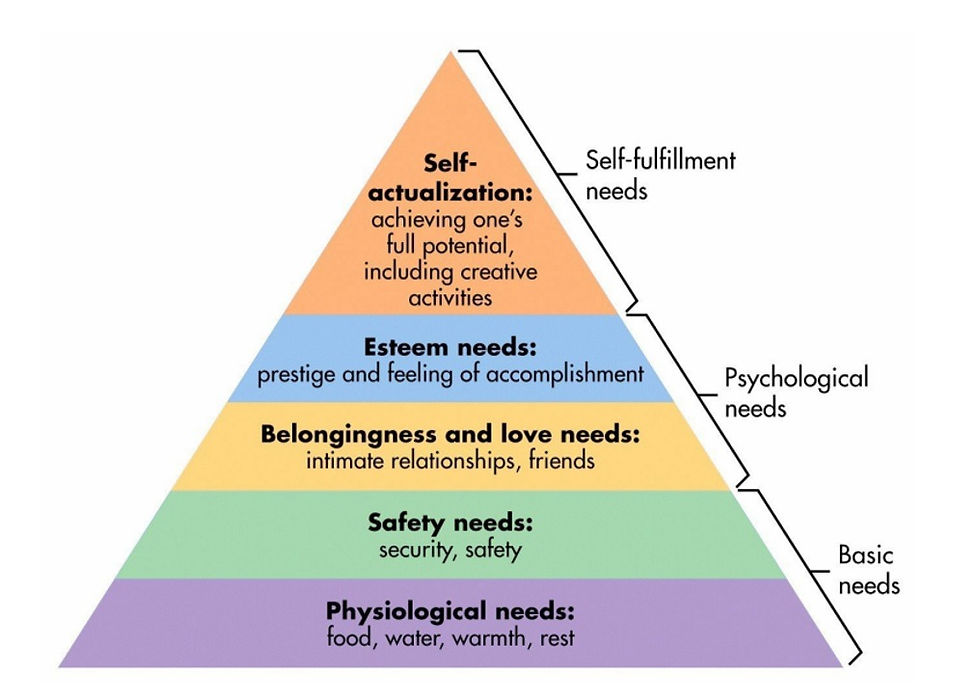
First, a psychological dimension involves processes to reach women´s full potential by enhancing their psychological capabilities. Reverberating Maslow´s (1943) theory of motivation (Figure 8), those are measured by women´s aspirations in life and their self-esteem, which refers to the evaluation of their overall self (global self-esteem) or facets (specific self-esteem) (Rosenberg et al, 1995) and comprises two subdimensions: self-worth rooted in the sense of virtue or moral worth (Gecas, 1982) and self-efficacy which describes women´s belief in their competence impacted by past accomplishments, vicarious experiences, others´ persuasion and psychological preconditions (Bandura, 1977b; Figure 9).

Second, a cognitive dimension comprises processes developing women's critical understanding of their subordination (Shah, 2011). This dimension reflects Carr's (2003) and Cornwall's (2016) ideas. They argue that instead of merely depositing knowledge into individuals, processes must kickstart Freire's (1970) cycle of critical consciousness on potentially oppressive structures to overcome them. In this, Freire distinguishes three different indicators: a) realisation and critical analysis of oppressive structures, b) a sense of agency to do something about them and c) taking critical action against them (Figure 10).

Third, an economic dimension entails processes which foster women's financial autonomy (Shah, 2011) and resonates with Kabeer's (2008) or Hall's (1992) ideas of the necessity to neutralise women's economic subordination. Studies show that a) access to employment is one indicator (Duflo, 2011). However, as, e.g., patriarchal household dynamics occur (Folbre, 1982; Parvin et al, 2004), b) control over earnings, c) personal financial decision-making power, and d) financial independence from families are other indicators.
Finally, a political dimension comprises processes enhancing the ability to analyse the political environment and act or mobilise for social change (Shah, 2011). Those processes correlate with Batliwala´s (1993) idea of social transformation. They are indicated by, e.g., a) knowledge of political systems, b) exercising the right to vote, and c) mobilisation of/involvement in campaigns (Stromquist, 1995). As studies show that women often suffer from burdening unremunerated household work, a final political indicator concerns d) their load of household work (Chioda, 2011). This framework provides the foundation to approach the subsequently outlined case study.
4 The mentorship programme
YFC´s mentorship programme since 2013 is one initiative of the community-driven NGO in the village Rurka Kalan in rural Punjab. In a conservative, agricultural and deeply patriarchal context without non-agricultural employment opportunities for women besides cleaning jobs, it employs local women as mentors. Their primary responsibility is facilitating a simultaneously conducted girls´ programme that offers free football sessions and workshops for adolescents in primary schools and community centres.
Within the first months, participants join sports sessions and a workshop series which teaches them the skills to work as mentors. Those sessions cover personal development, computer or language skills, and qualifications, including coaching certificates. Due to this introduction phase in which they earn an honorarium, mentors can start working in schools and community centres afterwards without higher education. Initially, their responsibilities include preparing and delivering youth sports sessions, training educators and teaching sport-for-development curriculums on health, personal development, substance abuse, political rights, and gender inequality. After a year, the salaries significantly increase. Depending on their initiative, participants then take up new responsibilities in the office or engage with other projects/partners of YFC on a community level. More experienced mentors, e.g., cooperate with local politicians or international partners through YFC. While working, mentors can upgrade their qualifications through workshops with partners abroad and access a global sport-for-development network. The programme is not bound to a time frame and serves as a case study to answer the outlined research questions by applying the following methodology.
5 Methodology
5.a Research approach
A constructivist interpretivist position is chosen because one regards the social reality as a subjectively created version of reality. Its experience/meaning depends on individuals whose interpretations and interactions construct that reality (Sumner and Tribe, 2008). This approach is crucial because empowerment processes are understood and experienced differently, and the researcher´s positionality, actions or understanding co-create reality (Rizzo et al, 2015; Burawoy, 1998; Smith, 1999). Besides that, the project assumes an overall inductive relationship between evidence and theory.
5.b Research design
The main component revolved around a qualitative case study. It was qualitative to obtain an in-depth understanding beyond the “hard facts beloved by policymakers” and to “subvert enduring colonial power relations”, which are upheld by tactical adaption of cartesian rational, western research approaches but are not culturally specific enough (Kay, 2009, p.1188). For this, one drew on primary research, including interviews and participant observation. However, to clarify psychological indicators, one quantitative, survey-like element was part of the interviews (Bryman, 2012).
Sampling
First, the most experienced participants who have worked for at least six years were purposefully selected because their experiences capture different salary levels, education, and responsibility. Furthermore, three mothers who consented to join were interviewed to provide additional perspectives for the second question. Finally, to seize the influence of the surrounding environment (Lyras and Hums, 2009), the programme initiator and two male head coaches who worked the most intensively with the participants over the years were purposefully selected (Table 2).

Data collection
First, the researcher incorporated observations as a voluntary weltwärts coach in the village between September 2019 and April 2020. This knowledge was recorded through weltwärts reports or diary notes and necessary to contextualize/understand the interviewees and their answers.
Second, twelve interviews were conducted online between July 1st and 15th, 2022. Most interviews were in English. However, particularly for mothers who did not command good English, daughters or a female mentor functioned as translators. The researcher directly accessed interviewees as she connected with them as a weltwärts coach in 2019/2020. Interviews were 60-90 minutes long and audio/video recorded. They were semi-structured to reverberate the researcher´s interpretivist, constructivist position and invite interviewees to interpret reality while merely being guided (Bryman, 2012; Appendix C-E). However, despite being inductive and allowing the participant to interpret first, follow-up questions incorporated indicators based on the applied methodological framework. Furthermore, while most indicators could be easily observed during those interviews, the researcher decided that self-esteem as a subjectively experienced household word needed further clarification (Baumeister et al, 2003). Consequently, after the interviews, participants were asked to rate explained changes in self-worth via ten questions provided by Rosenberg (1965, 1979) as well as self-efficacy via eight questions provided by Chen et al (1999) (Table 3, 4) for outlined crucial moments. Those well-known questionnaires were chosen as they display excellent reliability and validity (Corcoran and Fischer, 1987; Chen et al, 2001) and could thus complement/clarify actual results.


Data analysis
The primary data were analysed using Braun and Clark´s (2012) thematic analysis, which allowed summarising the participants´ perspectives flexibly while highlighting similarities and differences (King, 2004). Key steps included familiarisation with the data, coding, generating, reviewing, defining, and naming them. A latent approach was applied to understand people´s stated opinions and related context as interviewees may suffer from doxa. Despite an overall inductive approach, one admittedly incorporated indicators and concepts based on existing theories. For the complementing questionnaires, one followed Rosenberg´s (1965) and Chen et al´s (1999) scales for answers and added them up, whereby higher numbers equalled higher self-esteem.
5.c Ethical considerations
This project applied an explicit ethical framework to meet potential problems due to power differentials (Bryman, 2012). First, the project was counter-checked for ethical issues and obtained clearance on May 31st, 2022. Second, interactions were voluntary and occurred with fully consenting – written or verbal – participants. A sample consent form is attached (Appendix F). Similarly, data were collected anonymously, for research purposes only and stored securely to guarantee the privacy and data security. This methodology provided the subsequently outlined findings.
6 Findings
According to the participants, processes could be categorised into five phases.
6.a First phase

During the first weeks (Figure 11), participants developed an increased trust toward other programme participants and leaders due to positive experiences during conversations. Consequently, most women observed that previous inhibitions preventing them from talking with strangers outside of their family, speaking freely or voicing opinions toward males started to break down. For most, this was a new experience as they had previously only interacted with males inside their family and were shy. Slowly opening up within a safe space allowed mentors to become more articulate, which gradually fostered communication skills. A coach illustrates how crucial this is:
“When I [tried] to discuss what they feel or think about [how a girl child is treated within society], they were all shut. I really had to push and tell them to please talk. [It was] so difficult[…] as they think they shouldn´t say this or they say something wrong. [W]hen they slowly started talking, they didn´t stop [anymore].”
Those first developments built up enough self-esteem to join sports sessions afterwards, allowing for reaffirming physical experiences, including sprinting or scoring a goal, which gradually also cultivated self-efficacy related to physical abilities. After that, those two processes continued simultaneously and stimulated each other.
The extent to which this affected participant depended. E.g., previous participants of YFC´s youth programmes displayed greater global self-esteem already. The same applied to an orphaned participant who led the household alone, participants with outspoken female schoolteachers as role models or working female family members.
Similarly, it was not kick-started automatically. Creating a safe atmosphere was paramount to initiating and sustaining it. E.g., supportive contact persons from YFC or understanding mentors as role models proved essential when disrespectful comments within the community followed or conflicts within families arose because all with fathers leading the way disapproved. Often, an unfavourable attitude towards the programme had been the reason for disputes about start and programme-related aspects, including the dress code before. However, their intensity and frequency regarding continuation increased at the beginning. Reasons were manifold. E.g., female members had to work more during the day at home. Primarily, families were concerned about social pressure, traditional values or a potential reputational loss. A programme manager describes the common thinking amongst males:
“[S]ome don´t think that women are other human beings with the ability to take own decisions. [Women] were not even allowed to go to shops alone in the beginning. If they went twice, the community suspected a relationship with [someone].”
This perception of women spurred security concerns as participants travelled to work alone and were exposed to disrespectful comments from community members.
Similarly to individual processes, the degree within families varied. Families were more permissive if females had worked or attended other sports programmes. Likewise, families from relatively poor socio-economic backgrounds were more likely to be negligent of neighbours´ comments as they expected financial contributions later. During this stage, parents highlighted that the direct contact with and trust towards the actual programme managers de-escalated conflicts. E.g., YFC members approached families directly to foster trust and reassure their daughter´s safety by personally bringing them home.
Although neither conflicts nor community reactions got violent or abusive, those negative experiences caused enormous psychological stress for participants throughout phase 1. This was reinforced by burdening household work as many continued to fulfil their household duties. Not seldomly, this arose doubts about continuation among participants who considered themselves to be still compliant with traditional expectations. A coach, e.g., observed that
“[participants] had been put down so much into thinking they were secondary and supposed to be like their mothers or grandmothers that they had started making this their reality.”
During that time, participants confirmed that the supportive efforts of YFC members initiated them to start questioning those ingrained gender stereotypes and often to continue the programme. This initial critical realisation, however, was still in its infancy stage and stimulated by others.
6.b Second phase

After the first weeks, the second phase (Figure 12) started when the slight specific self-efficacy from phase 1 (Figure 13) allowed participants to explore new areas within the programme and join workshops to teach them the skills for their job.

While mastering basic skills, including negotiation techniques at first, participants observed how small-scale experiences of feeling and being able to do something utterly unfamiliar before facilitated growing self-efficacy in those abilities. This encouraged them to approach new matters, including drafting football session plans. Mastering those more significant matters again reinforced self-efficacy, which motivated participants to showcase those achievements in front of others. The experience of positive social persuasion by others nurtured their global self-efficacy and -worth to handle criticism better. After that, those processes continued to stimulate each other, what a youth mentor describes accordingly:
“When I showed [my skills and] the people appreciated it, my confidence level grew. Then, I upgraded my tasks according to my self-confidence level. First, I only took sessions to practice, then with children in school and later with young adults.”
Due to higher self-esteem, many participants started increasingly deploying their skills at home. As many parents were never capable of suchlike things and only educated until 10th grade, most of them were astonished. They positively acknowledged the participants´ skills, including writing an English letter for official purposes. This development not only boosted the participants´ global self-efficacy and -worth (Figure 14) but often de-escalated conflicts about continuation because families benefited.

However, the effects again varied. Family members of the orphaned participant were less reluctant to de-escalate conflicts as those women already acted independently in many regards and depended on management and leadership skills to a greater degree than other participants with less or no responsibility at home. Similarly, the applicability of skills mattered. As one participant outlined,
“[many] skills I honed were very helpful for my workplace. [Consequently, m]y mother [joked that] I am only sitting on [a] chair and could also learn more practical things.”
According to some, experiencing benefits via the daughter´s skills gradually made them think more tolerant about work-related matters at home. This development only occurred for mothers or young members and concerned some aspects, including wearing sports suits or talking to men. However, all fathers continued to disapprove of the daughters´ activities because they remained a financial liability and due to reputational damage. As in phase 1, the related conflicts continued to cause psychological stress and were accompanied by the feeling of exhaustion due to additionally burdening household work as mentors still fulfilled the same amount of household duties besides the programme. In combination with continuing non-violent but disrespectful comments and reactions of community members, participants experienced that phase as both empowering and emotionally draining. E.g., a participant described how
“neighbours thought that I´m only hanging out with guys and insinuated me that I´m just sleeping with guys. I can´t be teaching football the whole day.”
Although those adverse effects were always present, the experience of being capable of doing things independently and achieving good results – particularly in front of disapproving family members, caused participants to independently confirm initial critical thoughts on traditional gender perceptions during phase 1. Accordingly, they did not think about leaving the programme anymore but started critically analysing their environment. At that point, the gradually emerging critical awareness remained predominantly concerned with family structures. Mentors, e.g., questioned why brothers or fathers were accepted to negotiate with officials even though they were unfamiliar with English or official procedures. However, because participants still lacked a sense of agency, those developments remained without consequences.
6.c Third phase

After one year, a new phase set in when the mentors´ salaries increased significantly (Figure 15). On the one hand, earnings, and complete control over them from the start, enhanced the mentors´ financial decision-making power and consequently pushed self-esteem as they could buy make-up or shoes without their parents. Simultaneously, it rendered them financially independent from their families, who did not consider them a liability anymore. One participant described that during a health crisis:
“My family did not worry too much about me or finances anymore because I was earning some money and could take good treatment. Otherwise, my disease would have gotten worse.”
Due to financial independence, all family members gradually became more tolerant towards the programme and most related aspects, including coming home late, dress code or neighbours´ critical comments. Consequently, conflicts about continuation stopped, and the general conflict potential within families, thus participants´ stress levels were reduced. This development was partly also possible as mentors´ monthly financial contributions, which could sum up to 60% of their salary during crises, benefited them. According to all mentors, they considered and still consider that as granted even without a crisis and always contributed entirely voluntarily. A mother describes such a situation:
“She provided financial support [which] helped me to find a solution [for the farm´s water system]. She did this independently and, in the end, we got water for the farm. This was very beneficial for the whole family. Since then, I was tolerant of her work.”
However, tolerance was only acted out at home because the potential reputational loss of publicly tolerating concerned all.
Due to a more tolerant family and not being regarded as a liability anymore, global self-esteem increased, and participants consequently felt capable of negotiating with their families. One mentor describes the crucial effect of earning money in this:
“If you don´t have money, you can´t negotiate. I may be educated, talented and self-confident, but this is not enough alone because […]parents[…] don´t take you seriously.”
After further boosting self-efficacy by successfully negotiating initially minor issues, including coming home late, participants gradually approached more significant matters. These included the burdening load of household work which could be reduced gradually and decrease the participants' level of exhaustion. However, this development increased other females' stress and workload as males did not step. The actual extent depended. E.g., families more concerned with traditions or social reputation made few concessions. In contrast, families who depended on voluntary financial contributions were ready to reduce household work in exchange for earnings sooner.
After gradually pushing boundaries and thus further enhancing self-esteem at home, many mentors started to act without the consent of their families in some areas and, e.g., visited distant villages. All participants, including those previously attending YFC´s unpaid youth programme, could not reach this level of independence before earning money by drawing on skills or self-esteem. Subsequently, all participants observed gradually increasing aspirations. E.g., they could now imagine a different life than their mothers´ as housewives and started feeling less helpless.
However, earning money did not suddenly turn everything around. E.g., participants continued to suffer from psychological or physical stress due to fewer family conflicts or household work and continuing discriminating harassment of intolerant community members.
In contrast to before, the repeated experience of being able to act independently led to gradually becoming more indifferent to outsiders' opinions. Participants observed that the developments increased critical awareness as they could actively challenge some previously analysed realities. Because earnings also allowed entering new spheres, critical awareness increasingly concerned communities. E.g., mentors started to doubt socially ingrained expectations, including marrying early, because they enjoyed organising their lives more autonomously.
6.d Fourth phase

After about two years, phase 4 (Figure 16) started when increased self-esteem (Figure 13, 14) made participants approach more significant public projects, including tournaments and other events in villages and thus pushed socially established boundaries in communities. This change did not remain unchallenged by locals. E.g., mentors described how they now openly and spitefully – though non-violently – approached YFC, families and mentors directly. A mentor described that as follows:
“They said my father should marry me off and what am I doing on a bike. My father sometimes shouted at me, especially when he was drunk. Sometimes, I cried.”
This pressure caused participants to doubt, feel frustrated and kick-started conflicts about public engagement with socially pressured family members while the household burden exhausted them. Consequently, self-esteem suffered (Figure 13, 14). At this point, YFC´s emotional support and efforts towards critics or influential, like-minded contact persons in the background of events helped to de-escalate initial conflicts and motivate participants.
Soon afterwards, the participants´ achievements, including winning tournaments, being honoured by political leaders, or speaking freely on the news, astonished critics and made some, primarily members within the participant´s immediate surroundings, more tolerant of the programme. A crucial element was that they were incapable of that and that those achievements were valued highly. A participant, e.g. described a reaction when seeing her on TV:
“[Having seen me in the news], my neighbour´s relatives came to congratulate specifically me. E.g., they said that my English was so good.”
The appreciation of immediate community members also affected the attitude of family members. Experiencing the daughters´ success and a powerful reaffirmation of immediate community members made all parents proud. Consequently, family disputes on most matters decreased, and families displayed a more lenient attitude in public as their status increased within their social groups. A mentor described the role of reputation in this:
“There is a myth that once a girl goes out,[…] the whole family´s reputation suffers. That´s why my dad was afraid of. But, when I did a successful job, his reputation wasn´t threatened anymore and he was ok with it.”
However, mentors affirmed that others continued to criticize or envied successes. Similarly, the lenient stance predominantly concerned success- and programme-related aspects, while the pressure on gradually getting married started to represent a significant reason for conflicts which the women could only delay due to their income. Overall, the experience of overcoming opposition followed by appreciation and successfully influencing marriage plans enhanced participants´ self-esteem and sense of agency (Figure 13, 14). The women, e.g., started to feel capable of publicly addressing imposed societal expectations to be docile and silent on seemingly oppressive norms. Ultimately, those developments notably rose their aspirations which caused them to start engaging with international partners afterwards.
6.e Fifth phase

After three years, this marked the start of phase 5 (Figure 17), when participants additionally joined an international network through partners. Initially, online workshops fostered a reaffirming feeling of being understood amongst participants and taught about, e.g., political and women´s rights only. However, when partners also visited the project in India, participants actively experienced different realities, which sharpened participants´ critical awareness of Indian gender norms and structures. E.g., they realised how differently foreigners were treated and how openly disapproving a white female thinks about that.
This effect was pronounced for two mentors who later joined workshops in Russia, Germany, and Qatar. To facilitate this, practical and emotional support of YFC and network members was paramount to, e.g., guide and motivate participants with little multicultural experience when travelling and thus safety concerns. The same was necessary for their families, who were proud as their daughter´s international engagement again increased their status but concerned for safety reasons.
Overall, those experiences were perceived positively throughout and kickstarted the desire for collective action on a local level to promote change within communities. Participants remarked that this included political action as they understood that
“[o]nly if we voice our concern[s] regarding women´s issues to local political leaders so that they can change something, we can raise awareness about this and change the situation in the future.”
Consequently, participants started voting and collectively approaching local political leaders connected with YFC to improve women´s situation in the community regarding, e.g., health, education or sanitation and raise critical awareness on gender inequality amongst youths and their parents in schools. E.g., a mentor outlined how the team proactively cooperated with the Panchayat leader by
“arrang[ing] a meeting at YFC and discuss[ing] ideas for health improvement. I suggested that we organise a public meeting for women so that we can come up with ideas. [Ultimately], many joined, and we discussed with the grand panchayat members. In this meeting, there were 85 people.”
Mentors highlighted that such incipient collective action only worked through social networks. They furthermore required constant support, YFC´s facilities combined with a solid foundation of self-esteem, critical thinking, and financial independence to meet upcoming challenges. E.g., those included handling stress due to, then again, increasing critical comments of community members or attempts to manipulate projects. Sometimes, undertakings were frustrating, as one critically aware mentor experienced once:
“The wife was the village leader. But her husband managed some areas. I had to coordinate with both. Because of that, I said to her that she was the village head and she needed to use her power for decisions.”
Gradually, the following benefits for the community and appreciation of political leaders or partners facilitated by YFC through social media again caused astonishment and appreciation within the mentor´s immediate surroundings, including families, as a mentor outlined:
“[A sponsor] donated a pitch and I became their ambassador. In that time, I also connected to the political leader. This impacted how other people see women empowerment. Or, whenever I travelled or was working very well at the ground, my parents got proud, also, as people were asking is she your girl? […]I was the pride of the family!”
Despite continuing criticism within the community, all mothers started to support the programme at home as they now believed in the participant´s abilities. Those changes were again limited to the programme and related aspects as mothers, e.g., still wanted daughters to cover their bras in their wardrobe at home, marry or respect religious traditions during menstruation despite work. Most fathers remained tolerant in public only. A key concern preventing them from supporting in public was marriage. As most mentors did not want a husband who would often not allow them to work, increasing conflicts and emotional distress of participants accompanied empowering experiences. Overall, parents of mentors who went abroad displayed a more supportive attitude. E.g., they allowed other siblings to participate programmes or attended YFC´s workshops as one mentor outlined:
“They are so proud when they see me. Both participated recently at an event where I was speaking on stage. Or, when YFC honoured me with a scooter, or when I was in the news and my neighbours’ relatives congratulated me.”
Younger family members displayed a supportive attitude towards the programme and started to accept working women, sports participation, or traditional dress codes, e.g., in all cases, as standard. Several siblings then joined YFC´s youth programmes.
Despite many benefits, the additional engagement caused further workload, which again caused psychological stress and exhaustion. Similarly, while parents and the surrounding environment acted tolerant or supportive in programme-related matters, the overall community remained divided, with some continuing to non-violently disapprove through gossiping, false allegations or envy, which caused stress. However, participants perceived themselves as not so affected anymore as they believed in a possible better future now. This gradually developing indifference emerged due to participants´ higher self-esteem and aspirations after the experience of successfully working and being seen as such or support within their families despite disagreements on marriage.
Tout court, participants rated individual and family changes as significant. E.g. while the mentors with experience abroad admitted that they also felt disempowered as they still faced enormous challenges because of others´ intolerance, three considered themselves empowered and capable of changing gender inequality. One interviewee outlined that
“[n]othing is impossible. We need time. We can´t change things in seconds. I needed eight to nine years to change my family´s perception, and a little bit the perception of my community through this programme. But, we can do anything.”
Participant observation
At this point, the researcher entered the village as a voluntary football coach. While she could not directly observe the processes before, two of her observations support the later discussion.
First, participants differed significantly from other women within a profoundly patriarchal community. While other women barely participated in social life, wore traditional clothes, and had several children in their 20ies, participants spoke English, drove scooters, wore untraditional clothes, did not cover their hair, or autonomously cooperated with YFC´s socio-political networks to collectively promote, e.g., gender or health awareness workshops within communities. Especially mentors with international experience were pushing collective community action.
Second, while being critically aware in many regards, including unequal access to work or political positions, all subconsciously upheld some deeply ingrained traditions and hierarchies, especially outside of YFC´s safe environment. E.g., mentors took it for granted to pay respect to elderly males, to voluntarily contribute to families because they were working or, to fulfil more and typical feminine household work than men despite and after their job. Similarly, they expected mothers to take over their household work or men to conduct physically demanding work in the office. While mentors with experience abroad were slightly more aware of this within households, they continued practices including, e.g., religious traditions around menstruation. Nevertheless, all considered themselves empowered, which corresponds with a staff´s observation:
“They all think they are empowered. They also value empowerment differently. I mean for them it is a big deal because they can go shopping now. However, if they went to a big city, they would see that there is still a world to catch up. They have just left the house.”
7 Discussion
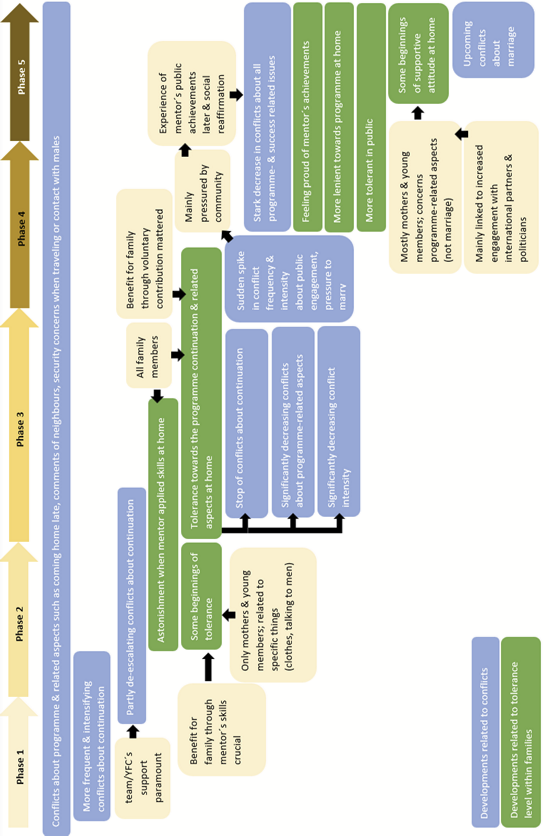
This study sought to contribute to debates around the effectiveness of SWEIs by investigating empowerment processes for women and within families through a qualitative case study in India. Individual processes occurred gradually, multidimensionally, context-dependently, sequentially, partly overlapping linked. Ultimately, they led to empowering and disempowering effects (Figure 18). Furthermore, they were connected to family processes, which mainly concerned changes in conflict intensity or frequency and the development of more tolerance towards the programme (Figure 19). The following discusses three themes that stood out: empowerment processes, the role of families and disempowering effects.

Empowerment processes
Generally, individual empowerment represented an interplay of altogether necessary and interrelated processes. E.g., they were linked across different dimensions of life. Initial psychological processes in phase 1 stimulated cognitive processes in phase 2. Later, both enhanced through economic empowerment in phase 3 before all reinforced in phase 4 and enabled political processes in phase 5 (Figure 18). Furthermore, they were linked across different societal levels. Throughout, individual processes provoked and overlapped with developments within families or the immediate surrounding and vice versa (Figure 11, 12, 15, 16, 17). Those results confirm Stromquist´s (1995) or Rowlands´ (1997) concept of empowerment as a multidimensional interplay.
A solid psychological and cognitive empowerment foundation proved pivotal for individuals during this interplay. E.g., participants would not have continued the programme after phase 1 or approached new tasks afterwards without that. Similarly, they would not have been able to withstand ongoing criticism or realise their disempowered status in the first place to challenge it then (Freire, 1970). Generally, those findings reflect other studies, including, e.g., Spaaij et al (2016) or Mwaanga and Prince (2016), but dive deeper by providing concrete moments and dynamics leading to that foundation.
It, e.g., required supportive efforts and commitment of staff. Like Lyras and Hums (2009) or Spaaij et al (2016), the results display the importance of a capable NGO led by critically aware initiators but add critical moments. E.g., efforts to encourage and de-escalate family conflicts in phase 1, reaffirming feedback in phase 2, assistance during public engagements in phase 4 or practical guidance and emotional support within international networks were paramount to initiate and sustain processes (Figure 18).
Furthermore, a solid foundation necessitated others´ positive appreciation within the immediate surrounding because, in line with Tajfel et al´s (1979) ideas, the interviewees´ strived to achieve positive social identities within their respective social groups. For individuals, this included positive appreciation by colleagues in phase 2 and families or within the immediate surrounding later, which agrees with Ogunniyi´s (2015) or Bankar et al´s (2018) findings.
Throughout the SWEI, providing platforms to foster suchlike appreciation supported processes. This initially concerned platforms to showcase skills within the team only. However, it had to occur during more significant public occasions to have the community experience/appreciate mentors´ achievements and decrease social pressure, thus rendering parents more tolerant and fostering the individuals´ self-esteem (Figure 13, 14) or sense of critical agency. Generally, this reflects Allport´s (1954) or Lefebvre´s (1991) ideas of exposure to new spheres of life to challenge stereotypes and overlaps with Xiong´s (2019) or Cislaghi et al´s (2020) findings of the benefits of women´s public presence. However, the results add to that by showing that presence alone is insufficient (Simon-Kumar, 2004). It, e.g., requires socially acknowledged successes to foster appreciation and gradually mould the habitus.
However, despite the importance of a psychological and cognitive foundation, economic opportunities – respectively control over earnings (Goetz and Gupta, 1996) - alone translated those resources into actual agency. By increasing financial independency or status, negotiation power and tolerance levels within families, they reinforced previous processes unprecedentedly and raised aspirations to change the situation. Mirroring Kabeer´s (2008) or Duflo´s (2011) ideas, this might explain why collective action for unpaid SWEIs (Chong et al, 2022) fails to materialise, but similar, earlier stages occur for Bankar et al´s (2018) paid mentorship programme.
While generally reverberating, e.g., Amsden´s (2012) ideas who criticises the neglect of employment creation in development agendas, the results also show that creating employment alone was insufficient as psychological and cognitive developments directed the enhanced agency to collective action – not employment per se. Without those, earning money would have been likely to streamline into oppressive structures by enhancing liberal agency only as in the case of, e.g., many microcredit programmes (Mayoux, 1999; Cornwall, 2007).
A key element directing the agency to collective action was exposure to different mindsets through engagement in international networks because it alone could foster a desire for critical action. Those findings reverberate Bandura´s (1977a) ideas of learning through observing and critical analysis (Freire, 1970) of the environment to challenge oppressive structures. They add to the existing sport-for-development literature, which covers sport-for-development networks generally (e.g., Hayhurst et al, 2011; EC, 2018; Burnett, 2009), but not how the exposure to different mindsets within them impacts participants´ empowerment processes.
The subsequently generated desire could only turn into collective action, as mentors could draw on local networks, including colleagues or connections to political parties provided by YFC, to organise and operate on a local level. This insight agrees with Lindgren et al (2002) or Seal and Sherry (2017) on the importance of social networks amongst participants for individual empowerment processes but also underlines the importance for SWEIs to additionally foster cooperation with external local networks or parties for collective action (Olson, 1982; Dell et al, 2018).
Ultimately, this interplay could kickstart collective action in phase 5. However, besides individuals, families played a key role in this because empowerment proved a social process (Alemu, 2017).
The role of families
Consequently, individual empowerment processes were linked to family contexts which reflects Georgas et al´s (2006) observations of families having influence over and being influenced by individuals.
E.g., family members' characteristics boosted or hindered processes (Kay and Spaaij, 2011). Female-headed households, socio-economically poorer families or households with working females were more tolerant towards the programme, which kickstarted early psychological and cognitive processes sooner while more traditional families prolonged them. This observation is in line with, e.g., Chawansky and Mitra's (2015) or Batool et al's (2019) findings.
Likewise, developments of family members (Figure 19) due to the SWEIs were positively or negatively linked to individual processes. E.g., they impacted individual processes. Family´s increasing appreciation of skills, earnings or achievements facilitated psychological and cognitive processes while ongoing family disputes generally prolonged/undermined individual processes. Likewise, individual processes impacted developments within families. While they experienced a reputational gain within their social groups due to participants´ increasing achievements, families continuously suffered from social pressure or criticism from disapproving community members. Those findings agree with Collumbien et al (2019) or Cislaghi et al (2020) but add depth by outlining concrete moments and directions.
Considering the profoundly patriarchal community, a gradually developing tolerant attitude towards the programme stands out (Figure 19). In line with Kato and Kratzer (2013) or Leach and Sitaram (2002), earning and contributing money to the family were paramount to tolerate at home because many did not consider the daughter a liability anymore. However, only appreciation within the immediate surrounding later fostered tolerance in public and following prestigious engagements with foreigners kickstarted the beginnings of support. Reflecting Tajfel et al´s (1979) ideas, prestige could thus impact deeply ingrained social norms, as in the case of Cislaghi and Bhattacharjee (2017). However, the effect was merely compromising as tolerance concerned the program or related aspects and did not change gender norms within families generally because parents upheld traditional expectations on female household work, religious traditions, or marriage. Similar to Cislaghi et al (2020), processes occurred sooner for mothers and to a greater extent for parents of mentors with prestigious experience abroad or young family members.
A more critical perspective
While many positive effects occurred, one must acknowledge that SWEIs simultaneously caused several disempowering effects (Figure 18).
First, this concerned actively experienced disempowerment. As in Bankar et al´s (2018) case, families, e.g., were increasingly socially pressured by disapproving communities, which only partly changed after the daughter´s successes. Likewise, female members suffered due to the additional workload at home because, contrary to Ogunniyi (2015), men did not step in. Similar to Cislaghi et al´s (2020) findings, individuals, too, continuously suffered from psychological stress due to criticism within communities and family conflicts. Although earning money and increasing social prestige decreased this, both aspects never ceased. Furthermore, similar to Kabeer (2005), the burdening household work exhausted participants even though it reduced after voluntary financial contributions.
However, results also indicate disempowering effects, which women were unaware of. Those occurred within households. E.g., despite displaying critical awareness of their mother´s subordinate status at home, participants considered their voluntary high financial contributions as normal and necessary to compensate for their inability to work at home. Similarly, female members alone were expected to bear the brunt of the additional household work when mentors worked. Furthermore, mentors considered it normal to fulfil more typical female household work than men despite and after their job, which represents Bourdieu´s (1977) phenomenon of doxa. Those insights confirm, e.g., Soman´s (2009) observation of women often considering their family duties higher than their work or not perceiving suchlike situations as unjust (Kabeer, 2011). The results thus indicate that participants did not challenge every aspect of the habitus.
The same applied within the community. While participants were critically aware of unequal access to employment or female politicians suffering from doxa, they did not question traditional religious practices related to menstruation, paid respect to senior males, or expected men to do physically demanding work. The results thus provide similar insights to other studies, which observe that participants of SWEIs have internalised gendered expectations despite being and feeling empowered to an extent regarding physical appearance (Velija et al, 2013; Zipp, 2017). However, they point out new areas within the household or communities, which the literature in other fields confirms (e.g., Leach and Sitaram, 2002). Because the focus of this project was not disempowerment through SWEIs per se, one must assume that other areas are concerned by doxa as well, which could be part of future research initiatives.
Embedding within the discussions
Overall, the study provides mixed results. On the one hand, it supports the radical interventionist view (Hartmann and Kwauk, 2011) because individually empowered mentors critically analysed and collectively acted against some oppressive structures at home and within communities (Freire, 1970; Batliwala, 2007). They thus actively reshaped the habitus within themselves or their immediate surrounding and co-created society (Elias, 1939). Consequently, the findings indicate that future SWEIs should establish a solid psychological and cognitive foundation, incorporate economic opportunities, provide platforms for appreciation, exposure to different mindsets or networks/facilities for direct local action, and involve families.
On the other hand, the study also endorses the dominant view because the immediate surroundings only partly changed their habitus and primarily for programme- or success-related aspects, collective actions did not turn into mass movements and seemingly empowered participants simultaneously suffered from doxa within households and communities (Guilianotti, 2004; Batliwala, 2007). Consequently, this SWEI proved insufficient to radically transform the habitus for all areas of life and people to kickstart big-scale social transformation (Kabeer, 1999).
Three main reasons for mixed results emerge from the findings. First and in line with Giddens (1984) or Elias (1939), this SWEI cannot replace further necessary structural change but only accompany it because both individual agency and structure play a part in creating and reshaping the patriarchal habitus in India. In line with Velija et al (2013), Lim and Dixon (2017) and Kay (2011), those findings thus call for further necessary simultaneous structural change. Reflecting on this insight in the light of current research, one is tempted to ask why not one study has investigated how to align structural agendas and agency-driven SWEIs so far to make them work better together. Further research should thus identify concrete opportunities to do so and pay particular attention to providing employment opportunities for critically aware participants of SWEIs to turn resources into agency.
Second, since “men dominate, oppress and exploit women” (Walby, 1990, p.20), a mentorship programme for females only excludes a significant part of the problem: men within communities who actively co-create the habitus and must cooperate for social transformation. Cornwall and White (2000) point out that there is no such thing as a women’s project. Future SWEIs and structural change through, e.g., structural policies should thus not only target women but include both men and local communities more to foster cooperation for social change. At the same time, further research must investigate how to do so best.
Finally, mixed results occur because the programme curriculum did not cover every gendered aspect of life (e.g., Aikman et al, 2005). While raising critical awareness related to, e.g., health, education, politics, or economics, it did not sufficiently pay attention to the household level or religiously motivated practices, e.g., what explains why doxa occurred in those areas. Consequently, SWEIs must adopt a more comprehensive curriculum which addresses all gendered spheres of life. Future research should seek out what areas are affected by doxa and how to best integrate them into future curricula.
While our findings point out three reasons, one cannot preclude that there are more that future research should seek to uncover.
Limitations
This study has limits, including its questionable representativeness due to the small, context-specific sample. Partly, this is acceptable because one intended in-depth, not generalisable insights for a small programme in three months. However, the fact that uninterested, dead, or suspicious fathers did not join remains a limitation. Although this was compromised through participant observation and others´ reports, it also confirms their merely tolerant attitude towards programme-related aspects in public.
Another limitation concerns power effects. The positionality of a white female researcher caused biasing effects, which were reduced through reflexivity and triangulation. Besides, this project was undeniably embedded in western thought systems. However, a qualitative approach sought to limit this by incorporating authentic local voices (Kay, 2009; Smith, 1999).
Furthermore, problems with indicators may occur. E.g., one cannot preclude unknown contextual confounding factors which influenced interviewees. However, participants sharing similar local contexts and interests over the years curtailed this risk (Pourhoseingholi et al, 2012). Likewise, scaling self-esteem via summing potentially subjectively differently weighted categories must be interpreted carefully (Gray-Little et al, 1997). Consequently, self-esteem scales were used to complement uncovered individual changes but not to compare individuals out of context.
A final limit refers to data which may result from potential lies, misunderstandings, -translations or biased answers of participants and exacerbate replicability. This problem was addressed through reflexivity, documentation, and transparency. Despite that, the researcher´s previous experiences with YFC as a volunteer may potentially still have biased some interpretations unintentionally.
8 Conclusion
Tout court, uncovering empowerment processes shows that SWEIs empower women to a certain extent but fail to initiate big-scale social transformation. However, one has to consider two aspects. First, one must ask oneself how far one can evaluate others' empowerment status from an outsider's perspective (Kay, 2009). The internalisation of norms over generations in India implies that subjective perceptions of inequality and subordination of Indian women do not need to represent an outsider's view who may lack cultural understanding (Basu, 1996; Smith, 1999). By falsely downplaying the importance of individual empowerment and overly highlighting adverse effects, one thus judges a fish by its ability to climb a Coastal Redwood tree in a patriarchal ocean such as India, where women “are worshipped [as goddesses] during the day and gang-raped at night” (Das, 2021).
Second, one must remind oneself that social transformation is a long-term undertaking. Consequently, one can simply not judge SWEIs´ potential to initiate big-scale transformation based on impacts within a relatively small amount of time – especially in such a hostile environment. This is like expecting the very same fish not only to climb a tree but to do it in a week. Simply put, this is impossible as changing deeply internalised realities does not happen overnight. It requires years of committed efforts - and a lot of them. It is thus not about whether SWEIs work but how to make them work better besides many other necessary undertakings to make social transformation happen.
Thus, this study concludes that SWEIs must a) incorporate males, families, and communities more, b) optimise the multidimensional interplay of empowerment processes and c) be accompanied by or linked to structural change.
[1] While acknowledging other gender identities, gender in this dissertation refers to either male or female, as this dissertation focus is women´s empowerment.
9 Bibliography
9.a Books and book chapters
Allport, G., (1954). The nature of prejudice. Cambridge/Reading, MA: Addison-Wesley.
Apffel-Marglin, F. and Marglin, S., (1996). Decolonizing knowledge: from development to dialogue. Oxford: Clarendon Press.
Bandura, A., (1977a). Social learning theory. Englewood Cliffs, NJ: Prentice Hall.
Bandura, A., (1997). Self-efficacy: the exercise of control. New York: W.H.Freeman&Co.
Basu, A., (1996). Girls’ schooling, autonomy, and fertility change: what do these words mean in South Asia. In R. Jefferey and A. Basu, eds., (1996). Girls’ schooling, women’s autonomy and fertility change in South Asia. New Delhi: Sage Publications.
Batliwala, S., (1993). Defining women’s empowerment. In: S. Batliwala, eds., (2014). Engaging with empowerment: an intellectual and experiential journey. New Delhi: Women Unlimited.
Baumeister, R., Campbell, J., Krueger, J. and Vohs, K., (2003). Does high self-esteem cause better performance, interpersonal success, happiness, or healthier lifestyles?. Psychological Science in the Public Interest, 4, pp.1–44.
Blinde, E., Taub, D., and Han, L., (2001). Sport participation and women’s personal empowerment: experiences of the college athlete. In: A. Yiannakis and M. Melnick, eds., (2001). Contemporary issues in sociology of sport. Campaign, IL: Human Kinetics.
Braun, V. and Clark, V., (2012). Thematic analysis. In: H. Copper, eds., (2012). APA handbook of research methods in psychology. Washington: American Psychological Association.
Bryman, A., (2012). Social research methods. New York: Oxford University Press.
Boserup, E., (1970). Women´s role in development. London: George Allen&Unwin.
Bourdieu, P., (1977). Outline of a theory of practice. Cambridge: Cambridge University Press.
Coalter, F., (2009). Sport-in-Development: accountability or development? In: R. Levermore and A. Beacom, eds., (2009). Sport and international development. New York: Palgrave Macmillan.
Corcoran, K., and Fischer, J., (1987). Measures for clinical practice: a sourcebook. New York: The Free Press.
Durkheim, E., (1997). The division of labour in society. Trans. by W. Halls. New York: Free Press.
Elias, N., (1939). The civilizing process. Oxford: Wiley-Blackwell.
Freire, P., (1970). Pedagogy of the oppressed. New York: Continuum.
Garfinkel, H., (1967). Studies in ethnomethodology. Englewood Cliffs, NJ: Prentice Hall.
Georgas, J., Berry, J., Van de Vijver, F., Kagitcibasi, C. and Poortinga, Y., (2006). Families across cultures. Cambridge: Cambridge University Press.
Giddens, A., (1984). The constitution of society. Berkley: University of California Press.
Hall, M., (1992). Women and empowerment. strategies for increasing autonomy. Washington, D.C.: Publishing Corporation.
Hartmann-Tews, I. and Pfister, G., (2003). Sport and women: social issues in international perspective. London: Routledge.
Kay, T., (2011). Development through sport? Sport in support of female empowerment in Delhi, India. In: B. Houlihan and M. Green, eds., (2011). Routledge handbook of sports development. New York: Routledge.
King, N., (2004). Using templates in the thematic analysis of text. In: C. Cassell and G. Symon, eds., (2004). Essential guide to qualitative methods in organizational research. London: Sage.
Lefebvre, H., (1991). The production of space. Oxford: Blackwell Publishing.
Levermore, R. and Beacom, A., (2009). Sport and international development. London: Palgrave Macmillan.
Lévi-Strauss, C., (1965). Tristes tropiques. Trans. By J. Russel. New York: Criterion Books.
Marx, K., (1996). Das Kapital. Washington, DC: Regnery Publishing.
Maschi, T., Turner, S. and Kaye, A., (2022). Empowerment theory. In: K. Bolton, C. Hall and P. Lehmann, eds., (2022). Theoretical perspectives for direct social work practice. New York: Springer Publishing.
McCaughey, M. (1997). Real knockouts: the physical feminism of women’s self-defence. New York, NY: New York City Press.
Momsen, J., (2004). Gender and development. London: Routledge.
Nicholls, S., (2009). On the backs of peer educators: using theory to 156 interrogate the role of young people in the field of sport-in-development. In: R. Levermore and A. Beacom, eds., (2009). Sport and international Development. New York: Palgrave Macmillan.
Nussbaum, M., (2000). Women and human development: the capabilities approach. New York: Cambridge University Press.
Olson, M., (1982). The rise and decline of nations: economic growth, stagflation, and social rigidities. New Haven: Yale University Press.
Parpart, J., Rai, S. and Staudt, K., (2002). Rethinking empowerment: gender and development in a global/local world. New York: Routledge.
Purewal, N., (2010). Son preference: sex selection, gender and culture in South Asia. Oxford: Berg.
Rosenberg, M., (1965). Society and the adolescent self-image. Princeton, NJ: Princeton University Press.
Rosenberg, M., (1979). Conceiving the self. New York: Basic Books.
Rowlands, J., (1997). Questioning empowerment: Working with women in Honduras. London: Oxfam.
Saavedra, M., (2009). Dilemmas and opportunities in gender and sport-in-development. In: R. Levermore and A. Beacom, eds., (2009). Sport and international development. New York: Palgrave Macmillan.
Schulenkorf, N. and Adair, D., (2014). Global sport-for-development: critical perspectives. New York: Palgrave Macmillan.
Sen, A., (1999). Development as freedom. New Delhi: Oxford University Press.
Sen, A. and Dreze, J., (1995). India, economic development and social opportunity. Delhi: Oxford University Press.
Smith, L., (1999). Decolonizing methodologies: research and indigenous peoples. Dunedin: University of Otago Press.
Stromquist, N., (1995). The theoretical and practical bases for empowerment. In: C. Medel-Anonuevo, eds., (1995). Women, education and empowerment: pathways towards autonomy. UIE studies. Available at: https://unesdoc.unesco.org/ark:/48223/pf0000100662.
Sumner, A. and Tribe, M., (2008). International development studies – theories and methods in research and practice. London: Sage Publications.
Todd, S. and Occiuto, K., (2022). Feminist theories. In: K. Bolton, C. Hall and P. Lehmann, eds., (2022). Theoretical perspectives for direct social work practice. New York: Springer Publishing.
Walby, W., (1990). Theorising patriarchy. Oxford: Blackwell.
Weber, M., (1962). Basic concepts in sociology. Trans. by H. Secher. New York: The Citadel Press.
9.b Journal articles
Aikman, S., Unterhalter, E., and Challender, C., (2005). The education MDGs: achieving gender equality through curriculum and pedagogy change. Gender and Development, 13(1), pp.44-55.
Alemu, B., (2017). The empowerment of young girls and women through sport and physical activity participation: a case study in Ethiopia. University of Jyväskylä, Faculty of Sport and Health Sciences. Available at: https://jyx.jyu.fi/bitstream/handle/123456789/54090/1/URN%3ANBN%3Afi%3Ajyu-201705242477.pdf.
Alsop, R. and Heinson, N., (2005). Measuring empowerment in practice: structuring, analysis and framing indicators. World Bank. Available at: https://openknowledge.worldbank.org/handle/10986/8856.
Amsden, A., (2010). Say‘s law, poverty persistence, and employment neglect. Journal of Human Development and Capabilities, 11, pp.57-66.
Amsden, A., (2012). Gross roots war on poverty. World Economic Review, 1, pp.114- 131.
Andreoni, A. and Chang, H., (2017). Bringing production and employment back into development: Alice Amsden´s legacy for a new developmentalist agenda. Cambridge Journal of Regions, Economy and Society, 10(1), pp.173-187.
Arora, R., (2012). Gender inequality, economic development, and globalization: a state level analysis of India. The Journal of Developing Areas, 46(1), pp.147-64.
Bandura, A., (1977b). Self-efficacy: toward a unifying theory of behavioral change. Psychological Review, 84(2), pp.191-215.
Bankar, S., Collumbien, M., Das, M., Verma, R., Cislaghi, B. and Heise, L., (2018). Contesting restrictive mobility norms among female mentors implementing a sport-based programme for young girls in a Mumbai slum. BMC Public Health, 18(8), pp.983-994.
Bansal, S. and Kumar, J., (2011). Women empowerment and self-sustainability through tourism: a case study of self-employed women in handicraft sector in Kullu valley of Himachal Pradesh. Himachal Pradesh University Journal, pp.1-11.
Batliwala, S., (2007). Taking the power out of empowerment – an experiential account. Development in practice, 17(4/5), pp.557-565.
Batool, S., Batool, S. and Kauser, S., (2019). Do personal and familial factors matter in women's familial empowerment? A logistic model. Paradigms, 13(2), pp.41-49.
Batra, R. and Reio, T., (2016). Gender inequality issues in India. Advances in Developing Human Resources, 18(1), pp.88-101.
Brady, M., (2005). Creating safe spaces and building social assets for young women in the developing world: a new role for sports. Women´s Quarterly, 33(1/2), pp.35-49.
Brady, M. and Khan, A., (2002). Letting girls play: the Mathare youth sports association´s football program for girls. Population Council New York. Available at: https://knowledgecommons.popcouncil.org/cgi/viewcontent.cgi?article=2247&context=departments_sbsr-pgy.
Buch, N., (2009). Reservation for women in Panchayats: a sop in disguise? Economic and Political Weekly, 44(40), pp.9f.
Burawoy, M., (1998). The extended case method. Sociological Theory, 16(1), pp.4-33.
Burnett, C., (2002). Women, poverty and sport: a South African scenario. Women in Sport & Physical Activity Journal, 11(1), pp.23-48.
Burnett, C., (2009). Engaging sport-for-development for social impact in the South African context. Sport in Society, 12(9), pp.1192-1205.
Carr, E., (2003). Rethinking empowerment theory using a feminist lens: The importance of process. Affilia, 18(1), pp.8–20.
Chen, G., Gully, S. and Eden, D., (1999). New general self-efficacy scale. Organizational Research Methods.
Chen, G., Gully, S. and Eden, D., (2001). Validation of a new general self-efficacy scale. Organizational Research Methods, 4(1), pp.62-83.
Chitnis, K., (2005). The duality of development: recasting participatory communication for development using structuration theory. Investigacion y desarrollo, 13(2), pp.228-249.
Chong, Y., Sherry, E., Harith, S. and Khoo, S., (2022). Sport for development programs contributing to sustainable development goal 5: a review. Sustainability, 14, pp.1-16.
Cislaghi, B. and Bhattacharjee, P., (2017). Honour and prestige: the influence of social norms on violence against women and girls in Karnataka, South India. Strive. Available at: http://strive.lshtm.ac.uk/system/files/attachments/STRIVE_Honour%20and%20Prestige%20paper.pdf.
Cislaghi, B., Bankar, S., Verma, R., Heise, L. and Collumbien, M., (2020). Widening cracks in patriarchy: mothers and daughters navigating gender norms in a Mumbai slum. Culture, Health & Sexuality, 22(2), pp.166-183.
Chalip, L., (2006). Toward a distinctive sport management discipline. Journal of Sport Management, 20, pp.1–21.
Chawansky, M., (2011). New social movements, old gender games?: locating girls in the sport for development and peace movement. Research in Social Movements, Conflicts and Change, 32, pp.121–134.
Chawansky, M. and Mitra, P., (2015). Family matters: studying the role of the family through the eyes of girls in an SfD programme in Delhi. Sport in Society, 18(8), pp.983-994.
Chioda, L., (2011). Work and family. World Bank Group: The Latin American Development Forum. Available at: https://documents1.worldbank.org/curated/en/587721467996694982/pdf/105982-PUB-Box394889B-PUBLIC-PUBDATE-5-12-16.pdf.
Chong, Y., Sherry, E., Harith, S. and Khoo, S., (2022). Sport for development programs contribution to sustainable development goal 5: a review. Sustainability, 14(11), pp.1-16.
Chopra D. and Müller C., (2016). Introduction: connecting perspectives on women’s empowerment. IDS Bulletin, 47(1A), pp. 1-10.
Coakley, J., (2011). Youth sports: what counts as “positive development”?. Journal of Sport and Social Issues, 35(3), pp.306-324.
Coalter, F., (2015). Sport-for-change: some thoughts from a sceptic. Social Inclusion, 3(3), pp.19-23.
Coalter, F. and Taylor, J. (2010). Sport-for-development impact study. University of Stirling: Department of Sports Studies. Available at: http://www.uksport.gov.uk/docLib/MISC/FredCoaltersseminalMandEManual.pdf.
Cohen, A., Melton, E. and Peachey, J., (2014). Investigating a coed sport´s ability to encourage inclusion and equality. Journal of Sport Management, 28, pp.220-235.
Collumbien, M., Das, M., Bankar, S., Cislaghi, B., Heise, L. and Verma, R., (2019). Practice-based insights in developing and implementing a sport-based programme for girls. Development in Practice, 29(1), pp.53-64.
Cornwall, A., (2016). Women´s empowerment: what works?. Journal of International Development, 28, pp.342-359.
Cornwall, A. and White, S., (2000). Men, masculinities, and development: politics, policies and practice. IDS Bulletin, 31(2), pp.1–6.
Darnell, S., (2010). Power, politics and “sport for development and peace”: investigating the utility of sport for international development. Sociology of Sport Journal, 27, pp.54-75.
Dell, M., Lane, N. and Querubin, P., (2018). The historical state, local collective action, and economic development in Vietnam. Econometrica, 86(6), pp.2083-2121.
Duflo, E., (2011). Women´s empowerment and economic development. National Bureau of Economic Research. Available at: https://www.nber.org/system/files/working_papers/w17702/w17702.pdf.
Entman, R., (1993). Framing: towards clarification of a fractured paradigm. Journal of Communication, 43(4), pp.51-58.
Folbre, N., (1982). Exploitation comes homes: a critique of the Marxian theory of family labour. Cambridge Journal of Economics, 6, pp.317-329.
Fuerniss, K. and Jacobs, J., (2019). We are strong: strategies for fostering body empowerment in a boxing program for middle school girls. Journal of Sport Psychology in Action, pp.1-12.
Gecas, V., (1982). The self-concept. Annual Review of Sociology, 8, pp.1-33.
Giulianotti, R., (2004). Human rights, globalization and sentimental education: the case of sport. Sport in Society, 7, pp.355-369.
Goetz, A. and Gupta, R., (1996). Who takes the credit? Gender, power, and control over loan use in rural credit programs in Bangladesh. World Development, 24(1), pp.45-63.
Gray-Little, B., Williams, V. and Hancock, T., (1997). An item response theory analysis of the Rosenberg Self-Esteem Scale. Personality and Social Psychology Bulletin, 23, pp.443-451.
Greendorfer, S. and Lewko, J., (1978). Role of family members in sport socialization of children. Research Quarterly. American Alliance for Health, Physical Education and Recreation, 49(2), pp.146-152.
Gutierrez, L., (1995). Understanding the empowerment process: does consciousness make a difference? Social Work Research, 19(4), pp.229-237.
Hancock, M., Lyras, A. and Ha, J., (2013). Sport for development programs for girls and women: a global assessment. Journal of Sport for Development, 1(1), pp.1-9.
Hartman, D. and Kwauk, C., (2011). Sport and development: an overview, critique, and reconstruction. Journal of Sport and Social Issues, 35(3), pp.284-305.
Hayhurst, L., Wilson, B. and Frisby, W., (2011). Navigating neoliberal networks: transnational internet platforms in sport for development and peace. International Review for the Sociology of Sport, 46(3), pp.315-329.
Hayhurst, L., (2013). Girls as the ‘new’ agents of social change? Exploring the ‘girl effect’ through sport, gender and development programs in Uganda. Sociological Research Online, 18(2), pp.1-12.
Hayhurst, L., MacNeill, M., Kidd, B. and Knoppers, A., (2014). Gender relations, gender-based violence and sport for development and peace: questions, concerns and cautions emerging from Uganda. Women´s Studies International Forum, 47, pp.157-167.
Hayhurst, L., Giles, A. and Radforth, W., (2015). I want to come here to prove them wrong: using a post-colonial feminist participatory action research (PFPAR) approach to studying sport, gender and development programmes for urban indigenous young women. Sport in Society, 18(8), pp.952-967.
Henderson, K. and Hickerson, B., (2007). Women and leisure: premises and performances uncovered in an integrative review. Journal of Leisure Research, 39(4), pp.591–610.
Hipolito-Delgado, C. and Lee, C., (2007). Empowerment theory for the professional school counsellor: a manifesto for what really matters. ASCA, 10(4), pp.327-332.
Huggins, A. and Randell, S., (2007). The contribution of sports to gender equality and women´s empowerment. International Conference on Gender Equality on Sports for Social Change. Available at: https://citeseerx.ist.psu.edu/viewdoc/download?doi=10.1.1.517.2234&rep=rep1&type=pdf.
Huis, M., Hansen, N., Otten, S. and Lensink, R., (2017). A three-dimensional model of women´s empowerment in the field of microfinance and future directions. Frontiers in Psychology, 8, pp.1-14.
Jarvie, G., (2011). Sport, development and aid: can sport make a difference? Sport in Society, 14(2), pp.241-252.
Jayal, N., (2006). Engendering local democracy: the impacts of quotas for women in India´s panchayats. Democratisation, 13(1), pp.15-35.
Kabeer, N., (1999). The conditions and consequences of choice: reflections on the measurement of women´s empowerment. UNRISD. Available at: https://www.files.ethz.ch/isn/28994/dp108.pdf.
Kabeer, N., (2005). Gender inequality and women´s empowerment: a critical analysis of the third millennium development goal 1. Gender&Development, 13(1), pp.13-24.
Kabeer, N., (2008). Paid work, women´s empowerment and gender justice: critical pathways of social change. Pathways Working Paper 3, Brighton: IDS. Available at: http://eprints.lse.ac.uk/53077/1/Kabeer_Paid-work_Published.pdf.
Kabeer, N., (2011). Between affiliation and autonomy: navigating pathways of women´s empowerment and gender justice in rural Bangladesh. Development and Change, 42(2), pp.499-528.
Kabeer, N., (2012). Women´s economic empowerment and inclusive growth: labour markets and enterprise development. SOAS University of London, International Development Research Centre and Department for International Development. Available at: https://www.lse.ac.uk/gender/assets/documents/research/choice-constraints-and-the-gender-dynamics-of-lab/Women%27s-economic-empowerment-and-inclusive-growth.pdf.
Kaur, S., (2010). Issue of women´s empowerment in Punjab: a critique. The Indian Journal of Political Science, 52(4), pp.333-344.
Kay, T., (2009). Developing through sport: evidencing sport impacts on young people. Sport in Society, 12(9), pp.1177-1191.
Kay, T. and Spaaij, R., (2011). The mediating effects of family on sport in international development contexts. International Review for the Sociology of Sport, 47(1), pp.77-94.
Kidd, B., (2008). A new social movement: sport for development and peace. Sport in Society, 11(4), pp.370-380.
Kidd, B., (2011). Cautions, questions and opportunities in sport for development and peace. Third World Quarterly, 32(3), pp.603-609.
Kippax, S., Stephenson, N., Parker, R. and Aggleton, P., (2013). Between individual agency and structure in HIV prevention: understanding the middle ground of social practice. American Journal of Public Health, 103(8), pp.1367-1375.
Klasen, S., (2000). Does gender inequality reduce growth and development? Evidence from cross-country regressions, University of Munich: Department of Economics. Available at: https://epub.ub.uni-muenchen.de/1602/1/paper_212.pdf.
Kato, M. and Kratzer, J., (2013). Empowering women through microfinance: evidence from Tanzania. ACRN Journal of Entrepreneurship Perspectives, 2(1), pp.31-59.
Leach, F. and Sitaram, S., (2002). Microfinance and women´s empowerment: a lesson from India. Development in Practice, 12(5), pp.575-588.
LeCrom, C. and Martin, T., (2019). Sport for development’s impact on cultural adaptability: a process and outcome-based analysis. Journal of Sport Management, 33(1), pp.12-24.
Liechty, T., Fleesha, W. and Sveinson, K., (2016). Embodied experiences of empowerment among female tackle football players. Sociology of Sport Journal, 33(4), pp.305-316.
Lim, S. and Dixon, M., (2017). A conceptual framework of sport participation and women´s empowerment. Managing Sport and Leisure, 22(5), pp.400-413.
Lindgren, E., Patriksson, G. and Fridlund, B., (2002). Empowering young female athletes through a self-strengthening programme: a qualitative analysis. European Physical Education Review, 8(3), pp.230-248.
Lyras, A. and Hums, M., (2009). Sport and social change: the case for gender equality. Journal of Physical Education, Recreation & Dance, 80(1), pp.7f.
Malhotra, A., Schuler, S. and Boender, C., (2002). Measuring women’s empowerment as a variable in international development. The World Bank: World Bank Workshop on Poverty and Gender: New Perspectives. Available at: MeasuringWomen-with-cover-page-v2.pdf (d1wqtxts1xzle7.cloudfront.net).
Maslow, A., (1943). A theory of human motivation. Psychological Review, 50(4), pp.370–396.
Mayoux, L., (1999). Questioning virtuous spirals: micro-finance and women´s empowerment in Africa. Journal of International Development, 11, pp.957-984.
Mayoux, L., (2000). Micro-finance and the empowerment of women: A review of the key issues. International Labor Organization. Available at: https://www.ilo.org/wcmsp5/groups/public/---ed_emp/documents/publication/wcms_117993.pdf.
McDermott, L., (2004). Exploring intersections of physicality and female-only canoeing experiences. Leisure Studies, 23(3), pp.283-301.
Meier, M., (2015). The value of female sporting role models. Sport in Society, 18(8), pp.968-982.
Meyer, K. and Roche, K., (2017). Sport-for-development gender equality impacts from basketball programme: shifts in attitudes and stereotyping in Senegalese youth and coaches. Journal of Sport for Development, 5(9), pp.49-57.
Mwaanga, O. and Prince, S., (2016). Negotiating a liberative pedagogy in sport development and peace: understanding consciousness raising through the Go Sisters programme in Zambia. Sport, Education and Society, 21(4), pp.588-604.
Newman, N., (2012). Calling transformative learning into question: some mutinous thoughts. Adult Education Quarterly, 62(1), pp.36–55.
Nols, Z., Haudenhuyse, R. and Theeboom, M., (2017). Urban sport-for-development initiatives and young people in socially vulnerable situations: investigating the deficit model. Social Inclusion, 5(2), pp.210-222.
Ogunniyi, C., (2015). The effects of sport participation on gender relations: case studies of female footballers in Johannesburg and Cape Town, South Africa. South African Review of Sociology, 46(1), pp.25-46.
Parvin, G., Ahsan, S. and Chowdhury, M., (2004). Women empowerment performance of income generating activities supported by rural women empowerment creation project (RWECP): a case study in Dumuria Thana, Bangladesh. The Journal of Geo-Environment, 4, pp.47-62.
Pourhoseingholi, M., Baghestani, A. and Vahedi, M., (2012). How to control confounding effects by statistical analysis. Gastroenterol Hepatol Bed Bench, 5(2), pp.79-83.
Purewal, N., (2018). Sex-selective abortion, neoliberal patriarchy and structural violence in India. Feminist Review, 119(1), pp.20-38.
Rivard, L., (2013). Girls´ perspectives on their lived experiences of physical activity and sport in secondary schools: a Rwandan case study. International Journal of Sport & Society, 3(4), pp.153-165.
Rizzo, M., Kilama, B. and Wuyts, M., (2015). The invisibility of wage employment in statistics on the informal economy in Africa: causes and consequences. The Journal of Development Studies, 51(2), pp.149-161.
Röger, U., Rütten, A., Frahsa, A., Abu-Omar, K. and Morgan, A., (2011). Differences in individual empowerment outcomes of socially disadvantaged women: effects of mode of participation and structural changes in a physical activity promotion program. International Journal of Public Health, 56(5), pp.465-473.
Rosenberg, M., Schooler, C., Schoenbach, C. and Rosenberg, F., (1995). Global self-esteem and specific self-esteem: different concepts, different outcomes. American Sociological Review, 60(1), pp.141-156.
Rossi, T. and Rynne, S., (2014). Sport development programmes for indigenous Australians: innovation, inclusion and development, or a product of ‘white guilt’?. Sport in Society, 17(8), pp.1030-1045.
Sardenberg, C., (2008). Liberal vs. liberating empowerment: a Latin American feminist perspective on conceptualizing women’s empowerment. In: IDS Bulletin, 39(6), pp.18-27.
Schulenkorf, N., Sherry, E. and Rowe, K., (2016). Sport-for-development: an integrated literature review’. Journal of Sport Management, 30(1), pp.22–39.
Seal, E. and Sherry, E., (2017). Exploring empowerment and gender norms in a sport for development program in Papua New Guinea. Sociology of Sport Journal, 35(3), pp.247-257.
Shah, P., (2011). Girls´ education and discursive spaces for empowerment: perspectives from rural India. Research in Comparative and International Education, 6(1), pp.90-106.
Shaw, S., (2001). Conceptualizing resistance: women’s leisure as political practice. Journal of Leisure Research, 33(2), pp.186–201.
Simon-Kumar, R., (2004). Negotiating emancipation. International Feminist Journal of Politics, 6(3), pp.485-506.
Singh, M., (2014). Gender inequality in sports in India. Issues and causes. European Academic Research, 2(5), pp.6926-6948.
Singh, S., (2017). The state of gender inequality in India. Gender Studies, 15(1), pp.139-157.
Singh, N., (2019). Gender, intra-household discrimination and cash transfer schemes: the case of Indian Punjab. Economies, 7(3), pp.75-88.
Soman, U., (2009). Patriarchy: theoretical postulates and empirical findings. Sociological Bulletin, 58(2), pp.253-272.
Spaaij, R., Oxford, S. and Jeanes, R., (2016). Transforming communities through sport? Critical pedagogy and sport for development. Sport, Education and Society, 21(4), pp.570-587.
Stromquist, N., (2015). Women´s empowerment and education: linking knowledge to transformative action. European Journal of Education, 50(3), pp.307-324.
Svenson, P. and Woods, H., (2017). A systematic overview of sport for development and peace organisations. Journal of Sport for Development, 5(9), pp.36-48.
Tajfel, H., Turner, J., Austin, W. and Worchel, S., (1979). An integrative theory of intergroup conflict. Organizational identity: A reader, pp.56-65.
Turner, S. and Maschi, T., (2015). Feminist and empowerment theory and social work practice. Journal of Social Work, 29(2), pp.151-162.
Velija, P., Mierzwinski, M., and Fortune, L., (2013). ‘It made me feel powerful’: women’s gendered embodiment and physical empowerment in the martial arts. Leisure Studies, 32(5), pp.524–541.
Wheeler-Brooks, J., (2009). Structuration theory and critical consciousness: Potential applications for social work practice. Journal of Sociology and Social Welfare, 36(1), pp.123-140.
Xiong, H., (2019). The construction of women’s social spaces through physical exercise in urban China. Sport in Society, 22(8), pp.1415-1432.
Yeboah, T., Serbeh, R. and Bembir, P., (2014). Omission of men from gender-development theory and praxis: a pathway for addressing the plights of women?. Journal of Social Sciences, 11(1), pp.7-19.
Zipp, S., (2017). Sport for development with ‘at risk’ girls in St. Lucia. Sport in Society, 20(12), pp.1917-1931.
Reports, conference, and seminary papers
European Commission, [EC], (2018). Sport Diplomacy: Identifying good practices. A final report to the European Commission. (PDF), Brussels: EC. Available at: http://hu.eusport.org/files/242-nc0418026enn.en.pdf.
International Institute for Population Sciences, [IIPS], (2021). National Family Health Survey (NFHS-5), India, 2019-21: Punjab. (PDF), Mumbai: IIPS. Available at: http://rchiips.org/nfhs/NFHS-5Reports/Punjab.pdf.
World Bank, [WB], (2017). Punjab – gender (English). India state briefs. (PDF), Washington, D.C., USA: WB. Available at: http://documents.worldbank.org/curated/en/392981504172754967/Punjab-Gender.
World Economic Forum, [WEF], (2022). Global gender gap report. (PDF), Geneva, Switzerland: WEF. Available at: https://www.weforum.org/reports/global-gender-gap-report-2022/digest.
Blogs, websites, statements, and data sets
Aujla, I., (2019). Only 1.55% landholdings in Punjab in name of women. (online). Available at: https://timesofindia.indiatimes.com/city/chandigarh/only-1-55-landholdings-in-punjab-in-name-of-women/articleshow/70901290.cms#:~:text=CHANDIGARH%3AOut%20of%20total%2010.93,Census%202015%2D16%20released%20recently, [accessed 28Aug22].
Das, V., (2021, N.a.). I come from two Indias. (video). Youtube. Available at: https://www.youtube.com/watch?v=5A-F9qu6c_4, [accessed 07Sep22].
Cornwall, A., (2007). Pathways of women´s empowerment. (online). Available at: https://www.opendemocracy.net/en/pathways_of_womens_empowerment-1/, [accessed 28Aug22].
Global Data Lab, [GDL], (2019). Sub-national human development index for Indian states 2019. (online). Available at: https://globaldatalab.org/shdi/table/shdi/IND/?levels=1+4&years=2019&extrapolation=0, [accessed 28Aug22].
McLeod, S., (2018). Maslow´s hierarchy of needs. (online). Available at: https://www.simplypsychology.org/maslow.html, [accessed 28Aug22].
Pan MacMillan, [PM], (2021). 22 shocking facts about gender inequality. (online). Available at: https://www.panmacmillan.com/blogs/lifestyle-wellbeing/shocking-gender-inequality-facts-melinda-gates, [accessed 28Aug22].
Sandhu, D., (2021). Punjabi pop music and docile female bodies: objectification of women for the male gaze.(online). Available at: https://feminisminindia.com/2021/11/16/punjabi-pop-music-and-docile-female-bodies-objectification-of-women-for-the-male-gaze/, [accessed 28Aug22].
Sen, A., (2012). Securing the future we want: gender and equality, economic development, and environmental sustainability, 27Sep2012, 67th United Nations General Assembly, New York, USA.
--------------------------------------------------------------------------------------------
This dissertation was originally submitted to SOAS, University of London on September, 8th, 2022.


Comments